A Full Service Contracting and Environmental Company
423.332.7077 Toll Free 888.544.1616

  • CONTACT US
  • MOLD REMEDIATION
  • LEAD PAINT
  • ASBESTOS
  • METH CLEANUP
  • DRYING SERVICES
  • SEWAGE CLEANUP
  • ODOR CONTROL
  • CRIME/DEATH SCENE
  • INSURANCE CLAIMS
  • ENVIRONMENTAL SAMPLING
  • PHASE I,II, III
  • DRY ICE / SODA BLASTING
  • Waterproofing
At Affinity all of our supervisors and technicians are accrediated in every disciple we work in for you.  This is to ensure that the techinques are the safest and most cost effective.
Welcome to Affinity Environmental
..............................................................................................................
Affinity will continue to be an industry leader providing the highest quality service in a safe, efficient and timely fashion. Our goal is to provide exceptional results beyond expectation through committed leadership, diverse experience, specialized training, and extensive equipment and resources. While Affinity is proud of our success in the past, we insist on setting the standard for integrity, professionalism and outstanding service for years to come.


We use only EMLAP accredited labs, as recommended  by OSHA and the EPA.
Affinity's impact of the environment

Since Affiinity is an environmental company, its make since that we would be concerned with our environmental footprint. Affinity has taken the stand that we will try to reduce our footprint by using environment friendly products that have low impact on the environment. Dry Ice blasting for graffiti, fire damage, mold, and lead paint abatement. Dry ice Blasters also have the ability to clean items in place without the worry of cross contamination. They also have no risk of waste stream generation or distribution because no solvents are used. Thermal imaging cameras are another way we reduce our footprint by using non destructive ways of discovering  water loss. Or detecting heat loss due to lack of insulation and helping customers reduce their energy consumption by being more efficient.

Affinity Environmental
9916 Walden Street
P.O. Box 789
Chattanooga, Tn 37384
Office 423.332.7077
Fax 423.332.7078


Affinity Environmental
Services

Mold


Mold Basics

Molds are part of a natural environment. Molds are fungi that can be found anywhere - inside or outside- throughout the year. About 1,000 species of mold can be found in the United States, with more than 100,000 known species worldwide.

Outdoors, molds can play an important roll in nature by breaking down organic matter such as toppled trees, fallen leaves, and dead animal. We would not have food and medicines, like cheese and penicillin, without mold.

Indoors, mold growth should be avoided. Problems may arise when mold starts eating away at materials, affecting the look, smell, and possibly, with the respect to wood-framed buildings, affecting the structural integrity of the buildings.

Molds can grow on virtually any substance, as long as moisture or water, oxygen and as organic source are present. Molds reproduce by creating tiny spore (viable seeds) that usually cannot be seen without magnification. Mold spores continually float through the indoor and outdoor air.

Molds are usually not a problem unless mold spores land on a damp spot and begin growing. They digest whatever they land on in order to survive. There are molds that grow on wood, paper, carpet, foods, and insulation, while other molds feast on the everyday dust and dirt that gather in most regions of a building.

When excessive moisture or water accumulates indoors, mold growth often will occur, particularly if the moisture problem remains uncorrected. While it is possible to eliminate all molds and mold spores, controlling moisture can control indoor growth.

All molds share the characteristic of being able to grow without sunlight; mold needs only a viable seed (spore), a nutrient source, moisture, and the right temperature to proliferate. This explains why mold infestation is often found in damp, dark hidden spaces; light and air circulation dry areas out, making them less hospitable for mold.

Molds gradually damage building materials and furnishings. If left unchecked, mold can eventually cause structural damage to a wood framed building, weakening floors and walls as it feeds on the moist wooden structural members. If you suspect that mold has damaged the building integrity, consult a structural engineer or other professionals with appropriate expertise.

Since mold requires water to grow, it is important to prevent excessive moisture in buildings. Some moisture problems in buildings
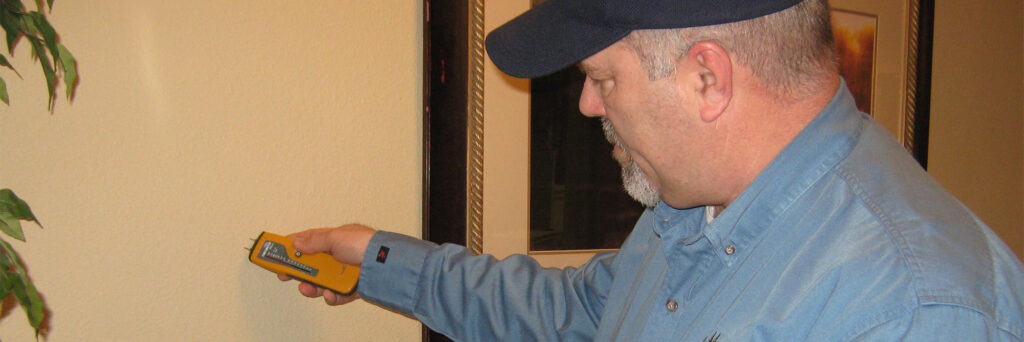
have been linked to changes in the building construction practices since the 1970's, which is resulted in tightly sealed buildings with diminished ventilation, contributing to moisture vapor buildup. Other moisture problems may result from roof leaks, landscaping or gutter that direct water into or under a building, or unvented combustion appliance. Delay or insufficient maintenance may contribute to moisture problems in buildings. Improper maintenance and design of building heating/ventilating/air-conditioning (HVAC) systems, such as insufficient cooling capacity for air condition systems, can result in elevated humidity levels in a building.

Lead Paint
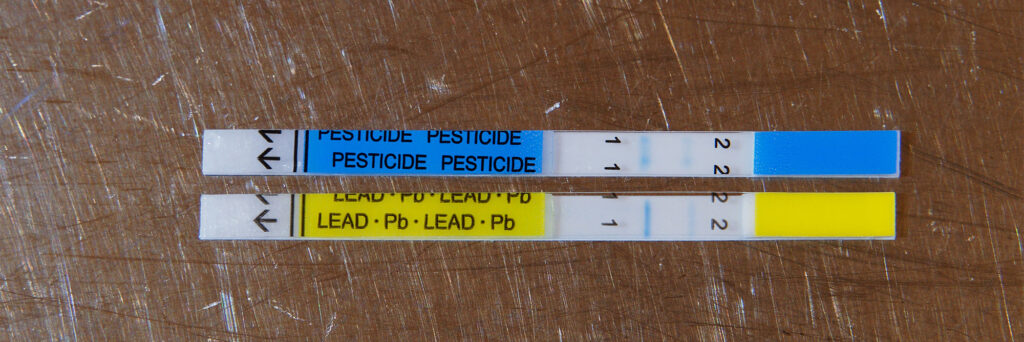
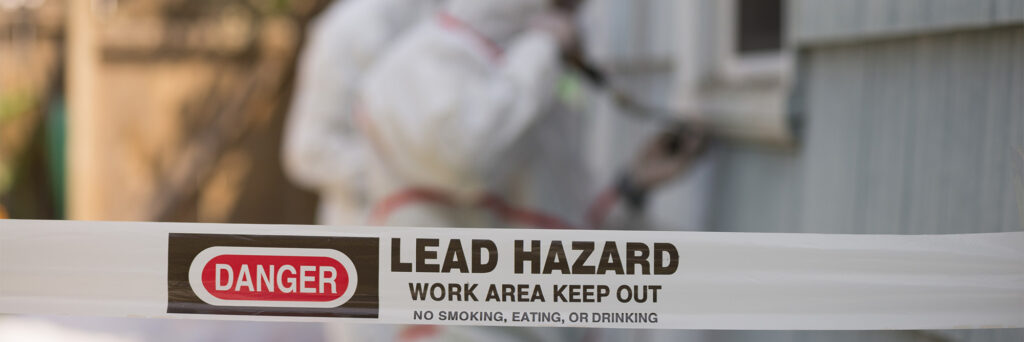
Lead is a toxic metal that was used for many years in products found in and around our homes. Lead also can be emitted into the air from motor vehicles and industrial sources, and lead can enter drinking water from plumbing materials. Lead may cause a range of health effects, from behavioral problems and learning disabilities, to seizures and death. Children six years old and under are most at risk.
Asbestos
Asbestos is the name given to a number of naturally occurring, fibrous silicate minerals mined for their useful properties such as thermal insulation, chemical and thermal stability, and high tensile strength. Asbestos is commonly used as an acoustic insulator, and in thermal insulation, fire proofing and other building materials. Many products in use today contain asbestos.

Asbestos is made up of microscopic bundles of fibers that may become airborne when asbestos- containing materials are damaged or disturbed. When these fibers get into the air they may be inhaled into the lungs, where they can cause significant health problems.
Crime\ Death Scenes
“Bloodborne Pathogens” means pathogenic microorganisms that are present in human blood and can cause disease in humans. These pathogens include, but are not limited to, hepatitis B virus (HBV), hepatitis C virus (HCV) and human immunodeficiency virus (HIV).  No one wants the job of cleaning up after ones own loved ones. We understand this, and treat this matter seriously and with sympathy. The employees of affinity are highly trained in cleaning up after a bloodborne pathongens. We hope you never need this services, but we're here if you need us. We work hand in hand with your insurance company on this and try to make the matter as painless as possible.
Methamphetamine Lab Cleanup
Meth manufacturing or "cooking" leaves behind 5 to 7 pounds of chemical waste for each pound of meth that is made. These byproducts are considered hazardous waste. Therefore the clean-up is subject not only to local ordinances but also to Tennessee hazardous waste rules.

The abuse of methamphetamine has reached epidemic proportions in Tennessee. As a result, law enforcement agencies, across the state, have encountered approximately 4,800 Clandestine Methamphetamine Laboratories (CML) from 1998 to present. CMLs are encountered on various types of properties ranging from single-family homes, rental properties, hotel and motel rooms, recreational vehicles, to automobiles. As a consequence of this illegal drug-manufacturing process, CMLs leave behind potentially hazardous residual contamination that pose a threat to human health and render a property 'Unsafe for Human Use.' Residual contamination can be found adsorbed onto surfaces, and permeated into walls, carpets, drapes, bedding, furniture, appliances, clothing, toys, etc.

It is because numerous properties have been potentially rendered 'Unsafe for Human Use', and pursuant to TCA 68-212 Part 5, the Tennessee Department of Environment & Conservation (TDEC) promulgated rules to determine when a property is 'Safe for Human Use' again. TDEC evaluated the risks posed by residual contamination and has developed reasonable, appropriate and protective (RAP) Cleanup Guidance to decontaminate properties affected by CMLs. TDEC's RAP Cleanup Guidance along with its Tiered Cleanup Responses are based on the premise that as more and more methamphetamine, precursors, or reagents are manufactured at a CML, the greater the potential is for more residual contamination to remain on the property that will need to be cleaned up

STORM WATER MANAGEMENT


According to EPA's National Water Quality Inventory: 2000 Report, prepared under Section 305(b) of the Clean Water Act, urban storm water runoff and discharges from the storm sewers are the primary cause of impaired water quality in the United States. These sources contribute to 13 percent of the impaired rivers and streams, 18 percent of impaired lakes, 55 percent of impaired ocean shorelines, and 32 percent of impaired estuaries.


Regulatory-Related Services

Affinity Environmental can provide you assistance with regulatory compliance related to the Clean Water Act, The National Pollutant Discharge Elimination System (NPDES) and Phase II requirements. We can provide recommendations for storm water management, erosion, and sedimentation control plans, and pollution prevention plans.


Water Quality Issues

Water quality issues are normally part of storm water management projects. NorthLake can provide you with: storm water monitoring plans, performing water quality modeling, erosion control evaluations, total maximum daily load evaluations, and aquatic toxicology assessments.


NATURAL RESOURCES MANAGEMENT

Natural resources management integrates the management of diverse natural resource components such as fish, wildlife, forests, wetlands, grasslands, soil, air, and water in order to conserve those natural resources, consistent with the ecosystem management principals, while providing quality public outdoor recreation experiences to serve the needs of the present and future generations.


Wetland Assessments

A wetland assessment is used to identify and delineate the extent of the site's wetland(s) based on the state and federal classification criteria. NorthLake works closely with the U.S. Army Corps of Engineers (USACE), state, and/or local government agencies to keep the project moving forward and minimize unforeseen delays normally associated with suspected wetlands. We can also develop and implement mitigation plans to restore, enhance or replace wetlands impacted by the project.


Ecological Studies


We can assess your site's terrestrial and aquatic ecology, and habitat suitability index. Let us perform your endangered species and cultural resources surveys, impact assessments and benthic macro-invertebrate sampling for stream monitoring.


Stream Assessment and Restoration


Stream assessments and restorations are accomplished by using the Rosgen technologies; i.e. "Natural Stream Design/Fluvial Geomorphology". Restoration of a stream(s) using Rosgen morphology stabilizes the stream(s) and address sedimentation/erosion issues and assists in the design and implementation of stream restoration and habitat mitigation.


Abandoned Mine Lands Reclamation


Abandon coal mines pose serious threats to public health, safety and welfare as well as degrade the environment. The programs of the Tennessee Land Reclamation Section accomplish three important things (1) They remove dangerous health and safety hazards that threaten the citizens of Tennessee; (2) they improve the environment; and (3) they restore the resources to make them available for economic development, recreation, and other uses. Problems typically addressed by the Land Reclamation Section include open or improperly filled mine shafts, dilapidated mine buildings and equipment, toxic mine refuse and drainage, landslides, mine fires, high walls and subsidence.


ENVIRONMENTAL HEALTH & SAFETY

The health and safety of a company's employees and visitors is paramount in today's market place and keeps you compliant with OSHA requirements.


Air Quality Services

Affinity Environmental can conduct the assessment of ventilation system(s) and air space within a building utilizing an air-sampling plan designed specifically for your facility. A clear and concise report presents the result of the sampling, conclusions, and recommendations. Similarly, an air quality assessment can be conducted for outdoor air space such as those associated with an open plant.


Noise Monitoring Services

Much in the same way as air can be monitored; spaces which noise may be a concern can be monitored for noise levels. As with air quality services, a report detailing noise levels, conclusions, and recommendations will be submitted


UNDERGROUND STORAGE TANK (UST) MANAGEMENT

Our environmental professionals have numerous years experience in the UST programs of many Southeastern states. We can provide you with any and all of your UST management needs. Depending on the laws of your state program, we can even defer some or all of you reimbursement expenses until payment is made by your state's fund.


       Compliance Assistance

Let our environmental professionals be your mediator when dealing with your state's UST program. We can provide everything from required documentation for your in-service tanks to the installation ad monitoring of soil vapor and ground water wells. We can even be present with you or for you during UST inspections conducted by state officials and rapidly respond to any size spill you may have.

Site Assessment

Should a release be discovered at your facility, our environmental professionals will conduct an assessment of your site following the guidelines develop by your state's UST program. Atypical site assessment assesses the geologic nature of the site and the nature and extent of the decontamination: test pits, geologic studies, soil vapor studies, ground water modeling and sampling soil, surface water and ground water.


Remedial Action Plans

The information collected for and presented in the site assessment report will be utilized in the selction of the most cost effective remedial technology(s). This could be as simple as excavation of the surface soil impacted by the spill to the design and installation of an onsite treatment system.

Tank Compliance Survey

The purpose of a tank compliance survey is to evaluate the existing conditions of the individual tanks and tank system for the purpose of regulatory compliance. This could be as simple as conducting a tank and line tightness test but could require more intensive inspective utilizing other methods.


Dry Ice And Soda Blasting

Kinetic Energy
As with conventional blast technologies (sand, water, glass bead, corn cob, etc.) the velocity of the media impacting on the surface transfers energy to the surface being cleaned/prepared. This energy transfer is responsible for most of the work being done by other blasting technologies but is only one aspect of dry ice blast cleaning.


Thermal Differentials
When the pellets of dry ice impact the contaminant, a slight temperature differential is established between the substrate and the contaminant, each exhibit a specific rate at which they will accept the temperature difference. The thermal differential that is established between the substrate and the contaminate will initiate or assist in the removal process. It should be noted that the dry ice pellets sublimate (turn from solid to gas) on impact, leaving no media contamination.


Molecular Expansion
When carbon dioxide sublimates (from solid to a gas) it expands 800 times its size. As the molecules expand they assist in the removal process.
                               

The Media Material
Dry ice is the solid form of carbon dioxide (CO2), which is a colorless, tasteless, odorless gas found naturally in our environment. For use in blasting operations the dry ice is manufactured into small pellets, which resemble rice. The pellets are stored in insulated containers until they are used.
                               

A safe cleaning environment
Dry ice is non-toxic unlike many solvents used in the cleaning industry such as TCA. The non-toxic dry ice blasting system will significantly decrease employee exposure to hazardous chemical agents and other dangerous cleaning methods. Health risks are reduced, and operator safety is enhanced, creating a safer working environment overall.


Dry cleaning
Dry ice blasting cleans thoroughly and leaves your equipment dry. It works without chemical solvents, without lubricants and without water, so it's the perfect cleaning solution for electrical equipment or other water-sensitive applications.


Dry Ice and the Printing Industry Dry ice blast cleaning has proven itself extremely useful, effectively removing dry ink build-up from: Gears, Deck Guides, Side Frames, Gripper Bars, Roller and Roller Cups, and Sensitive Electrical Components. Ink build-up, which causes poor alignment and results in low print quality, requires time-consuming plate mounting adjustments and wasted material in press runs. Costly disassembly, solvent cleaning, reassembly and readjustment can add up to days/weeks of printing down time resulting in loss of time and capital. Dry ice blasting is an on-line cleaning process. Most cleaning can be completed in a couple of days without the use of toxic solvents, hazardous waste material and worker exposure. The cost of cleaning with dry ice is far outweighed by the economics of alternative service and down time.


Dry Ice and the Food Industry
Within the food industry sanitation and cleanliness are a major concern. Food and carbon build-up can inhibit the performance and health standards of costly equipment. Dry ice blasting can replace some processes using water, detergents, and sanitizers. Solid CO2 sublimates directly to vapor without a liquid phase (and is also a sanitizing agent), surface moisture and bacterial regrowth will effectively be eliminated up to 75%. Dry ice has proven itself to destroy a significant biofilm build-up of listeria and salmonella and has been approved by FDA and USDA safety standards. Affinity provides on-line cleaning of processing equipment such as: Mixers, Waffle Irons, Molds, Ovens, Filters, Dough Forming Fixtures, Conveyors, Etc.


Phase I, II, and III Environment Site Asessments


Phase I
A Environmental Site Assessment is a report prepared for a real estate holding which identifies potential or existing environmental contamination liabilities. The analysis, often called a ESA, typically addresses both the underlying land as well as physical improvements to the property; however, techniques applied in a Phase I ESA never include actual collection of physical samples or chemical analyses of any kind. Scrutiny of the land includes examination of potential soil contamination, groundwater quality, surface water quality and sometimes issues related to hazardous substance uptake by biota. The examination of a site may include: definition of any chemical residues within structures; identification of possible asbestos containing building materials; inventory of hazardous substances stored or used on site; assessment of mold and mildew; and evaluation of other indoor air quality parameters[1]. Contaminated sites are often referred to as "brownfield sites." In severe cases, brownfield sites may be added to the National Priorities List where they will be subject to the U.S. Environmental Protection Agency's Superfund program.

Actual sampling of soil, air, groundwater and/or building materials is typically not conducted during a Phase I ESA. The Phase I ESA is generally considered the first step in the process of environmental due diligence. This type of study is alternatively called a Level I Environmental Site Assessment. Standards for performing a Phase I site assessment have been promulgated by the US EPA[2] and are based in part on ASTM in Standard E1527-05.[3] If a site is considered contaminated, a Phase II Environmental Site Assessment may be conducted, ASTM test E1903, a more detailed investigation involving chemical analysis for hazardous substances and/or petroleum hydrocarbons.